You hear your sump pump turn on. A few moments later, it starts again. Or maybe it never seems to shut off.
Is it handling extra water—or warning you that something is wrong?
A sump pump that keeps running may be responding to heavy groundwater, a stuck float switch, a check valve problem, or a restricted discharge line. The first thing to notice is whether the water level drops while the pump operates.
Here’s how to understand what you’re hearing and decide when to call a professional.
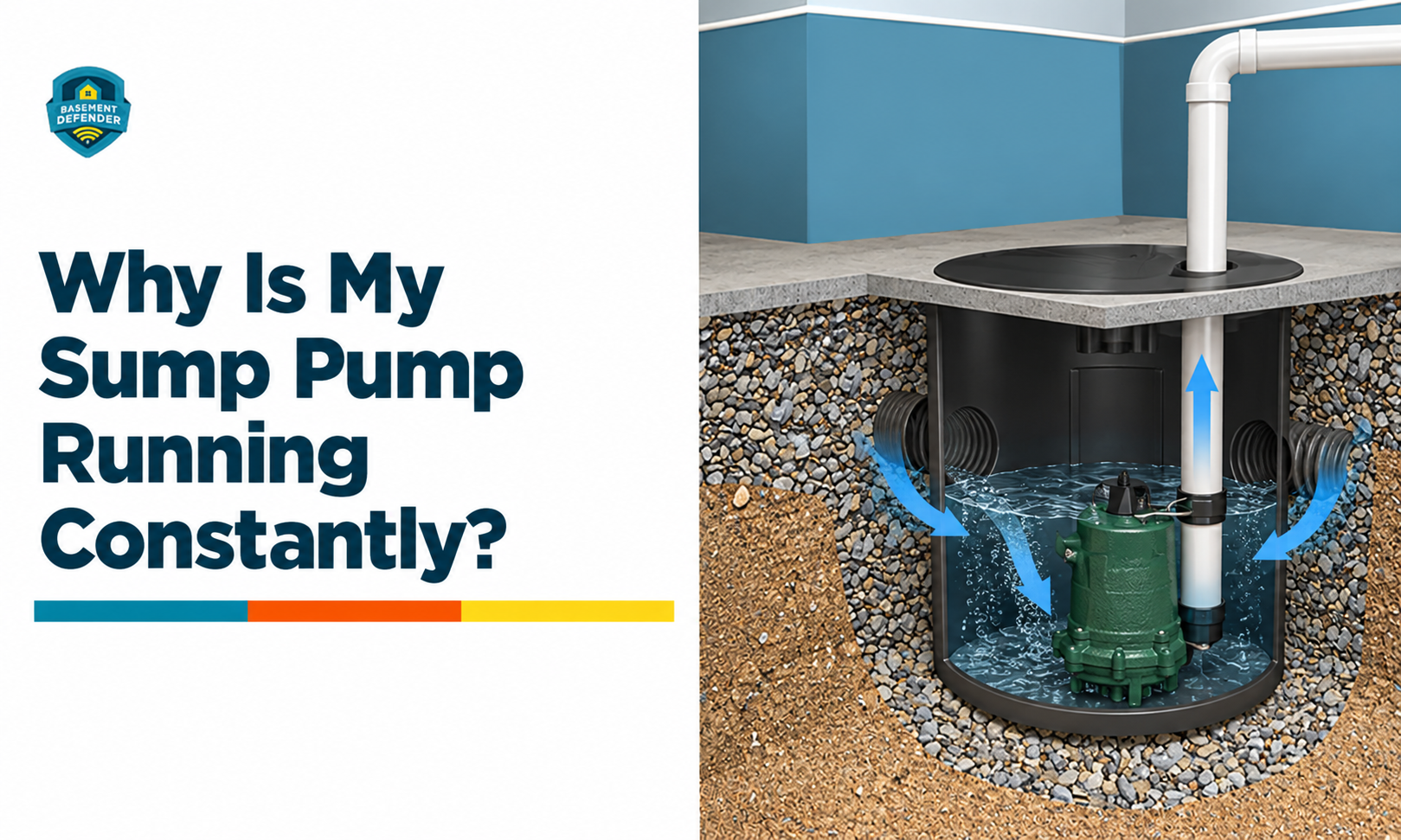
Your sump pump turns on when water reaches a certain level in the sump pit. It pumps that water outside, then shuts off when the level falls.
During wet weather, water may enter the pit quickly enough to make the pump operate frequently. However, a sudden change in its usual pattern deserves attention.
There is also a difference between:
Both can have several causes. Watching what happens to the water level helps a professional identify the problem.

Heavy rain, snowmelt, and a high water table can increase the amount of water reaching your drainage system.
If the pump lowers the water level but the pit quickly refills, it may be responding to ongoing groundwater. If the level keeps rising while the pump runs, arrange prompt service—the system may not be keeping up.
Think of the float switch as the pump’s automatic on-and-off control. As water rises, the float rises and signals the pump to start.
If the float becomes obstructed or the switch fails, the pump may keep running after the water level drops. A pump running in a nearly empty pit needs attention.
Look for visible interference from the pit wall, cords, or debris without reaching into the operating system. Have a professional inspect the switch before attempting adjustments.
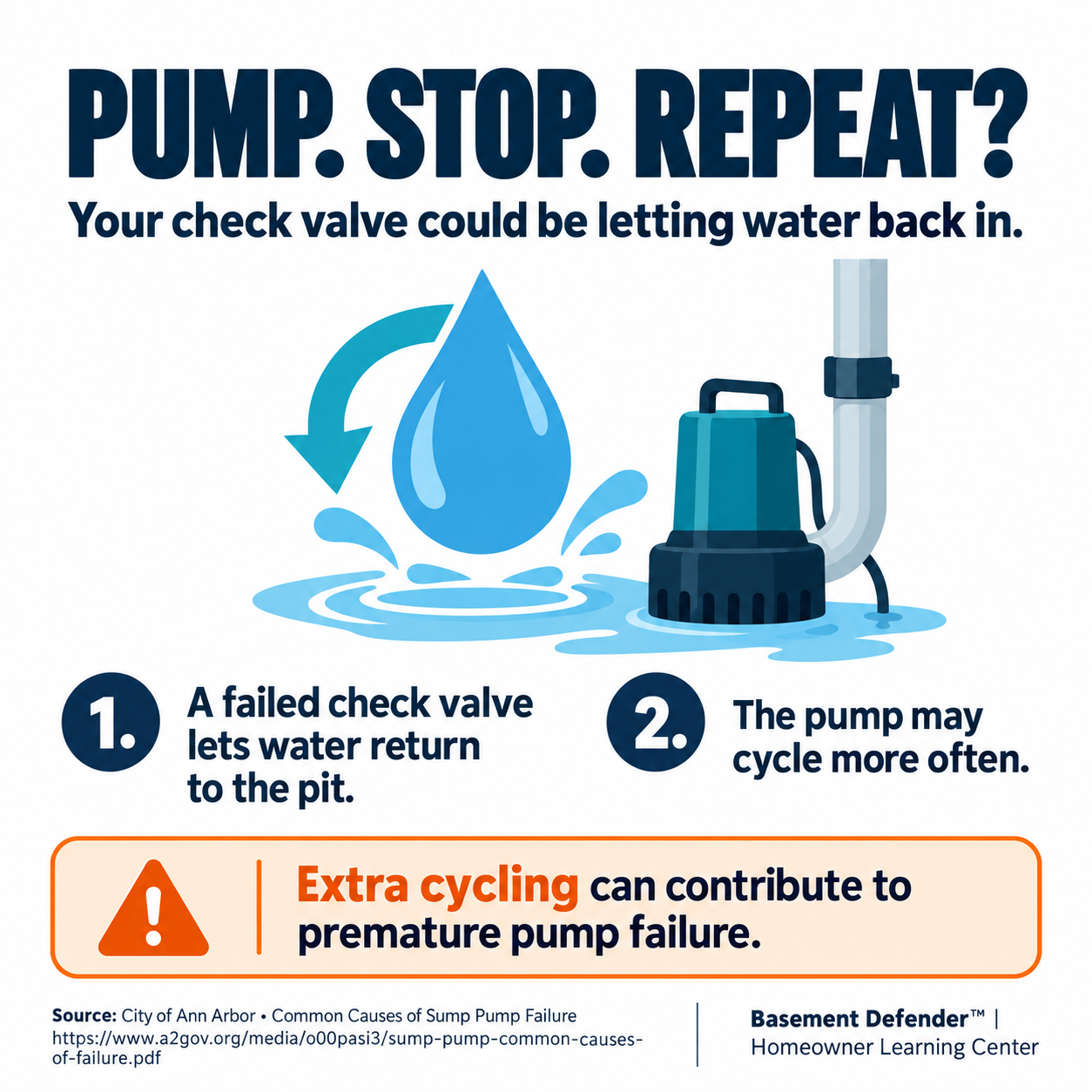
A check valve helps keep water in the discharge pipe from falling back into the pit after the pump stops.
When that valve leaks or fails, some of the water the pump just removed can return. The water level rises, the pump restarts, and the cycle repeats.
If you notice water rushing back immediately after shutdown, ask a professional to inspect the valve. Repeated cycling can increase wear on the system.
Your pump needs a clear path to move water outside. An obstruction in the discharge pipe can reduce flow, leaving the pump running while the water level barely changes.
From a safe location outside, check whether the discharge outlet is visibly blocked. Avoid taking apart piping while the system is operating.
For more on where that water should go, read our homeowner’s guide to proper sump pump discharge.
Pump performance depends on more than horsepower. The height water must travel and the resistance in the discharge piping affect how much water the pump can move.
If the pump runs but cannot lower the water level, a professional should evaluate its condition, the piping, and the required pumping capacity. Installing a larger pump without identifying the cause may leave the underlying problem unresolved.
Before calling for service, gather a few useful observations:
Do not enter standing water near electrical equipment or handle wet plugs and outlets. Any hands-on inspection should follow the pump manufacturer’s instructions, including disconnecting power safely.
Arrange prompt service if:
If water is approaching the top of the pit or entering the basement, treat the situation as urgent.

Groundwater conditions do not always match the weather outside. However, a new or unexplained change can also indicate a switch, check valve, or drainage problem. Start by observing the water level and arrange an inspection if the behavior continues.
Simply unplugging it can leave your basement without active pumping. If it is running dry or appears faulty, get prompt professional guidance. Disconnect power safely before any hands-on service, following the manufacturer’s instructions.
Hearing the motor tells you it has started. You also need to know whether it is moving water and lowering the level in the pit.
Understanding your pump’s normal behavior makes changes easier to recognize. Regular maintenance and testing help you stay informed about the system you depend on.
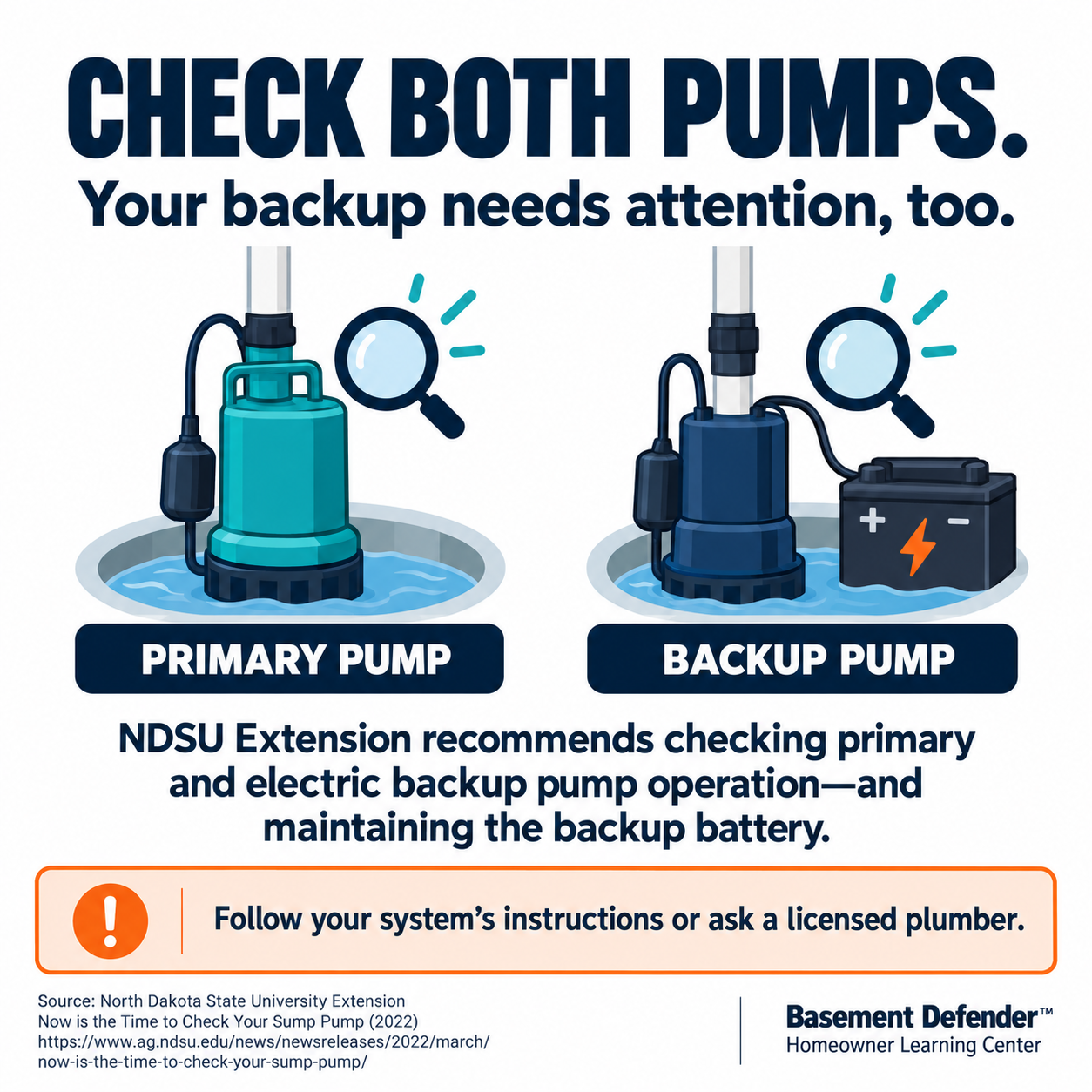
Basement Defender™ adds patented, exclusive daily testing of your primary sump pump, compatible backup pump, battery, and charger, with alerts when a problem is detected.
This device TESTS your sump pump every day.
Daily testing complements professional maintenance and physical inspections. It helps you identify system problems before the next time you need your pump.
Explore Basement Defender™ and learn how proactive testing can help protect your basement.